

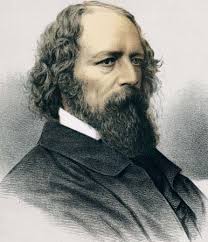
BIOGRAPHY
Alfred, Lord Tennyson was the most renowned poet of the Victorian era. His poetic writings inspired a lot of authors.
Born in England in 1809, Alfred, Lord Tennyson began writing poetry as a boy. He was first published in 1827, but it was not until the 1840s that his work received regular public acclaim. His “In Memoriam” (1850), which contains the line “‘Tis better to have loved and lost than never to have loved at all,” cemented his reputation. Tennyson was Queen Victoria’s
poet laureate from 1850 until his death in 1892.
Early Years and Family
Alfred Tennyson was born in Somersby, Lincolnshire, England on August 6, 1809. He
would be one of his family’s 11 surviving children (his parents’ firstborn CONTINUE
Crossing the Bar
Sunset and evening star,
And one clear call for me!
And may there be no moaning of the bar,
When I put out to sea,
But such a tide as moving seems asleep,
Too full for sound and foam,
When that which drew from out the boundless deep
Turns again home.
Twilight and evening bell,
And after that the dark!
And may there be no sadness of farewell,
When I embark;
For tho’ from out our bourne of Time and Place
The flood may bear me far,
I hope to see my Pilot face to face
When I have crost the bar.
FORM OF THE POEM
The poem is made of four quatrain stanzas with ABAB rhyming scheme. The first and third lines of each stanza have couple of beats longer that the second and fourth lines.
DICTION
The language of the poem is contemporary, hence, very easy to understand and comprehend.
SUMMARY
The poem is a metaphorical description of life after death. The poetic personae makes use of symbols to illustrate the event of closing of one’s life.
The ‘bar’ spoken of in the poem refers to the hip of sand packed by the tidal movement of the sea water as it hits the seashore. It is at this sandbar that ships stop. For a boat to reach the bar, it creates tide that gets to the bar and makes a sound. This sound, the poetic personae calls, “the moaning of the bar”.
The symbolic words in the poem are “sunset and evening star” and twilight and evening bell” both of which will be explained under ‘figures of speech’.
Whatever poetic technique that is employed in this poem is mainly to emphasize one theme, “life after death and the events that should follow”. The poetic personae affirms that when he passes over, there should be no grief, crying or moaning on that behalf. He is of this opinion because, he believes that he will see the creator and author of his life, God.
The poem is satirical in nature in that it admonishes the reader to embrace death with hope of goodness in the life beyond as against have a sense of pain. Shedding tears for the dead isn’t proper, especially as we often do not know where the person will end after crossing this reality.
 Litionary
Crossing the bar. Awesome 👍👍👍👍 poetry
LikeLike