

THEMES The poem is an eye opener on the reality that surrounds death. It lays emphasizes on the following themes: Grief free farewell: the poetic personae has it emphasized in the poem that no one should feel bad, cry or mourn when he dies. This is because he is going to see his creator in… Continue reading CROSSING THE BAR -Themes, poetic Devices
Category: WAEC/NECO
Crossing the Bar – Stanza Summary
STANZA SUMMARY Stanza one ‘Sunset and evening star’ informs the reader that the poetic personae has come of age and is close to death. ‘Sunset’ and ‘evening’ depicts the end of the day, but is poetically deployed in the poem to mean the end of one’s life. This death call he accepts as his, and… Continue reading Crossing the Bar – Stanza Summary
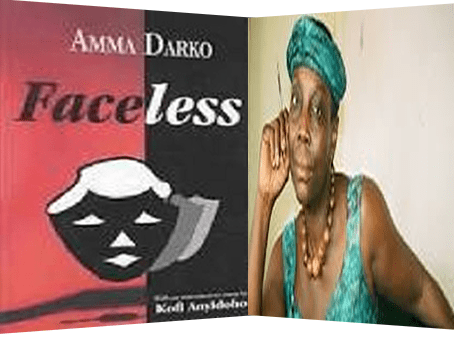
FACELESS – theme, techniques
FACELESS – THEMES, TECHNIQUES Theme of superstition In the prose, the characters believed that certain spiritual phenomena affects the lives of people. Maa Tsuru is believed to have been cursed by her mother to suffer in life. She herself believed this including her husband and mother-in-law. More so, Onko, the character who raped Baby-T, is… Continue reading FACELESS – theme, techniques
FACELESS – summary of the story
FACELESS - summary of the story BOOK ONE ATTEMPTED RAPE As the novel opens, fourteen year old Fofo is seen sleeping on an old cardboard at Agbogbloshie market. She has a job at the vegetable market in Agbogbloshie where she washes carrots. The market is close to a slum known as Sodom and Gomorrah.… Continue reading FACELESS – summary of the story
Faceless – Settings, Plot, Cast
Biography of the author Amma Darko was born in Koforidua, Ghana, on June 26, 1956, and she grew up in Accra. She studied in Kwame Nkrumah University of Science and Technology, Kumasi, and gained a diploma in 1980. She worked with a Technology Consultancy Centre in Kumasi. She was born Ophelia Darko. "Amma" is a… Continue reading Faceless – Settings, Plot, Cast
Blood of a Stranger – THEMES, DRAMATIC TECHNIQUES USED IN THE PLAY
Blood of a Stranger - THEMES, DRAMATIC TECHNIQUES USED IN THE PLAY THEMES Religious evil – This is evident in Soko’s character of lying to the whole village that the gods spoke to him about the coming of a stranger. Likewise, the use of humans for sacrifice. Substance of abuse – The drama also exhibits… Continue reading Blood of a Stranger – THEMES, DRAMATIC TECHNIQUES USED IN THE PLAY
Blood of a Stranger – SUMMARY OF THE STORY
THE SUMMARY OF THE STORY ACT 1, SCENE ONE Maligu, the king’s adviser, stands in front of the cave waiting for Soko, the chief priest, to come out. The chief priest of the land is supposed to be sleeping in the cave every night to atone for the sins of the people, but, Soko stays… Continue reading Blood of a Stranger – SUMMARY OF THE STORY
Blood of a Stranger — Plot
About the Playwright Raymond Caleb Ayodele, alias “Dele”, born in Freetown on March 27, 1948 Freetown. Charley was a Sierra Leonean writer and playwright in English and Krio language. He studied in Freetown and London and worked for the Ministry of Education. He was also a playwright and director. Co-founder of the Tabule Theatre. Dele… Continue reading Blood of a Stranger — Plot

Vanity – Themes
THEMES Loss of value – The poem portrays the high rate of decadence in African cultural value which is being taken over by that of America and the western world. Backwardness – The backwardness in politics and administration, education, health and economy of Africa is bitterly expressed in the poem by the poetic persona when… Continue reading Vanity – Themes
Vanity – figures of speech, mood, tone and structure
POETIC DEVICE/FIGURES OF SPEECH Rhetorical question --- the poem itself is a rhetorical question. Each stanza harbours not less than two of this. E.g. – “who indeed will hear then with laughter?” what ear to our sobbing hearts” Metaphor – The word “beggar” is used to compare Africans to people who are impoverished and are… Continue reading Vanity – figures of speech, mood, tone and structure
 Litionary