

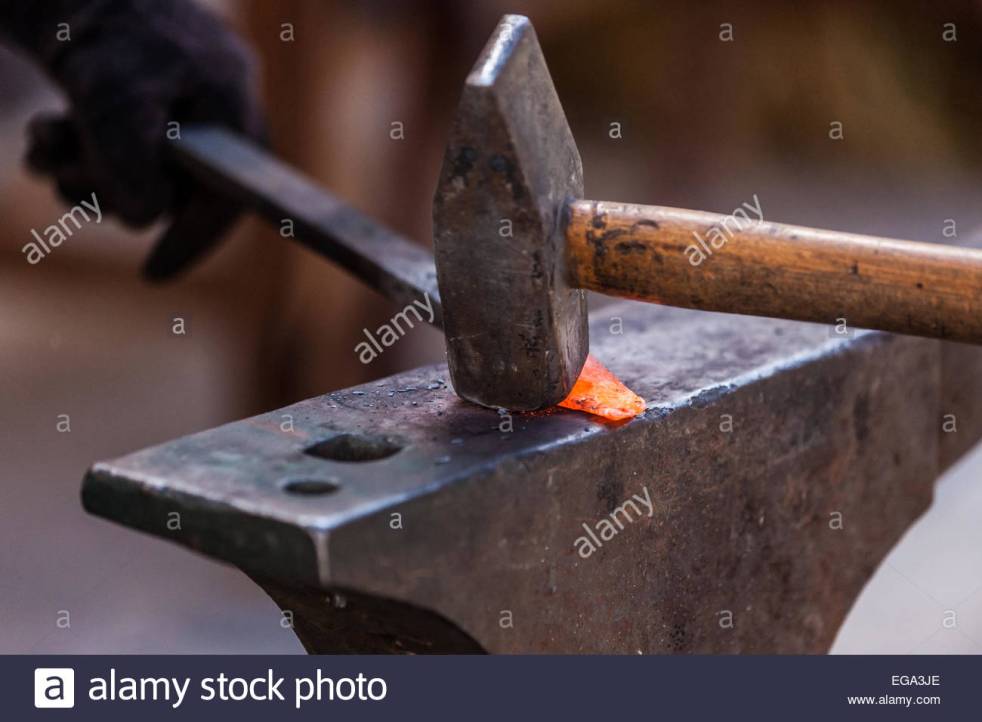
The Anvil and the Hammer
If things were to turn around and time fly back, most Africans would refuse to embrace civilization wholly, but rather look at what it has to offer, and apply it in African societies.
The poem, The Anvil and the Hammer by Kofi Awoonor, brings to limelight, in a poetic form, the process of transformation Africans went through to arrive where they are today. A transformation process which is part of the intellectual terrorism that Africans suffered during the colonial rule.
Analysis using the method of the Realms
First, before delving into the stanza, it is pertinent to understand the title of the poem.
“Anvil” and “Hammer”, are two main instruments used by a blacksmith in the forging house.
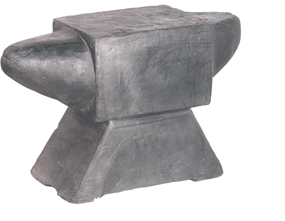
Anvil – a heavy block of iron on which heated pieces of metal are shaped by hammering.
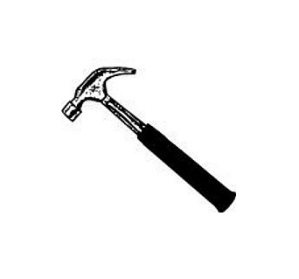
Hammer – a tool consisting of a piece of metal with a flat end which is fixed onto the end of a long thin usually wooden handle, used for hitting things
Pangs – this is a sharp sudden feeling of a mental or emotional pain, as of joy or sorrow.
Trappings – Clothing or equipment. That which gives appearance of something. It is something that covers something. You can refer to the shell of an egg as its trapping.
Tenuous – Something that lacks importance
Sisal – Central American Plant of the genus agare, cultivated for its sword-shape leaves that yield fibre used for rope
Fetish – Something which is believed to possess, contain or cause spiritual or magical powers.
Laced – intertwined and neatly knotted. E.g. – tied shoelace.
Flimsy – Something that is likely to bend or break under pressure, weak, shaky, flexible or agile.
Jargon – A technical terminology unique to a particular subject or language characteristic of a particular group.
Dialectic – Any formal system of reasoning that arrives at a truth by the exchange of logical argument.
Outlaw – A fugitive from the law; in a humorous sense, an in-law; a relative by marriage.
Whirlpool – A swirling (spiral movement) body of water. Turmoil or agitated excitement.
Estuary – coastal water body where ocean tides and river water merge.
Snatches – from the word ‘snatch’ which means to grasp quickly.
Reverberations – An echo or series of overlapping echoes
Splash – The sound made by an objecting hitting a liquid
Moan – A low mournful cry of pain, sorrow or pleasure.
The above words are explained to help our understanding of the poem. We are to put it into the poem as it suits the context of the poem.
STANZA ONE
Here, the poetic persona gives us a chronological flow of what happened.
“Caught between the anvil and the hammer
In the forging house of a new life”
The metal which is to undergo a process of transformation is caught between the anvil and the hammer, and no longer in the usual forging house of a blacksmith, but in a new one.
“Transforming the pangs that delivered me
Into the joy of new songs”
Having read the poem for the first time, getting to these lines, one would concur that it’s actually a human person that is caught between the anvil and the hammer.
The individual in question is the African man who is caught between two cultures: African and western culture, in a new forging house which is colonialization.
The anvil which is the base where the metal is placed symbolizes the African land and culture upon which the African man stands. The hammer represents civilization which comes by force upon the African man through a process known as colonialization.
The clashing/meeting of the two cultures had the personality of the African man between them. This personality is being transformed no longer in the normal African setting governed by ancestral laws, but by tenets and statutes of the western world, in an African environment.
The last excerpt above, seems to depict that the poetic persona accepts the transformation wholeheartedly as he points out that the pains(pangs) which he was born into is now changed into joyful songs.
Lines 5 to 9 brings to mind, the African norms and values (Trappings) in which the African man has being in and which the poetic persona affirms not to be important (tenuous). The norms also have religious foundations and backings as the poetic persona puts it:
“Washed in the blood of a goat in the fetish hut (shrine)”
This African values are then laced (mixed) very well with the attractive ways of life of the western world. Then, the outcome(dialectic) of the mixture created and enthusiastic spirit in the African man which makes him to always be looking for something in the outlaw’s hill (Western world).
“The jargon of a new dialectic comes with the
Charisma of the perpetual search in the outlaw’s hill”
One could affirm that this excerpt informs us that after the African man has had a taste of the African and western culture, the new him saw the attractiveness of civilization and became very interested in it.
STANZA TWO
Having seen that the new African man, a product of colonialism, has become more civilized that civilization, he cries out to the ancestors and probably to the elders in the society who still know the nitty gritty of the African culture, to help inculcate African values and norms into the new African man.
“Sew the old days for us our fathers
That we can wear them under our new garment (civilization)
After we have washed ourselves in
The whirlpool of many rivers’ estuary”
They will have in their minds the African cultures, but will put on a civilized look. This is because they have seen and being in many places where different cultures meet (river estuary).
The poetic persona from line 15 to the last line points out that the new African personality is aware of the castigations and negative statements of stereotype and prejudice labelled against Africa by the white (e.g. Monkeys, half humans etc.). But they will ignore them and their sentiments, use the little things they learnt from the whites (snatches from their tunes) and build and African nation.
“Make ourselves flags and anthems
While we lift high the banner of the land”
The use of flags and anthems insinuates that the political structures of the western world will be used in the new African nation. In the ancient days, African communities has no flag or anthem as identities of a state. More so, the Whiteman’s political structure will be used to lift the new African state.
“And listen to the reverberations of our songs
In the splash and moan of the sea”
The new state will be built and new songs (Positive statements and achievements on Africans against the rumors made by the white). The songs and developments will be spread, and Africans will listen as t echo in the world and hear the responds of the world.
Simply put, this poem illustrates the attack on African culture by civilization through colonialism, causing a clash and birth of a new African man who is almost ignorant of his own original culture. Hence, he regains himself and cries for help to build himself a new nation with the knowledge he got from civilization.
 Litionary
this poem has inspired me. It shall, from now on be my pledge. Our fate is in our hands.
LikeLike
Please help me to comment on the dual religious identity of the modern day African
LikeLiked by 1 person
I appreciated this poem in high school and I really learnt a lot from it…
LikeLike
I really love this story . I will like to say a very big thank you to the author and all contributes to this work of act.
LikeLike